
Can You Take Chesty Cough Medicine for Dry Cough?
You're standing in the pharmacy aisle, head foggy, throat scratchy — and you just grab the first cough syrup you see. Sound familiar? Most people do exactly this. The problem is, chesty cough medicine and dry cough medicine are not the same thing. They work in completely opposite ways, and using the wrong one can leave you feeling just as miserable — or even make things worse.
So let's clear this up once and for all.
 First, What's the Difference Between Dry and Chesty Cough?
Before you pick a medicine, you need to know which type of cough you actually have.
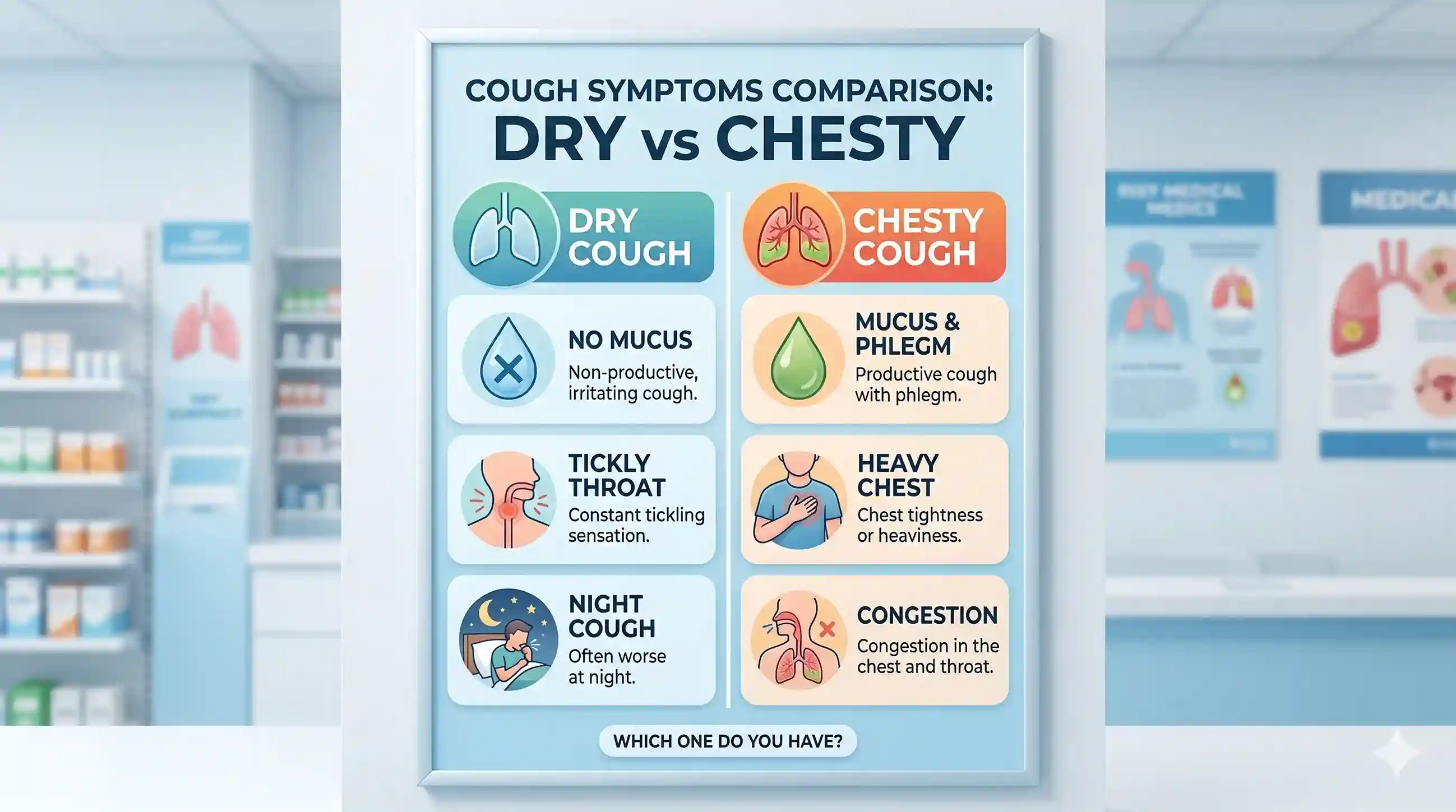
Dry Cough: A dry cough produces no mucus or phlegm. It feels like a tickle or scratch at the back of your throat that you just can't shake. It's often caused by viral infections like a cold or flu, allergies, acid reflux, asthma, or irritants like smoke or dust. The cough itself achieves nothing — it's just your body reacting to irritation. Dry coughs tend to get worse at night when you lie down.
Chesty Cough: A chesty cough, on the other hand, comes with mucus or phlegm. Your chest feels heavy and congested. When you cough, you're actually bringing something up — and that's your body doing its job, trying to clear your airways. Chesty coughs are commonly caused by chest infections, bronchitis, or upper respiratory tract infections (URTIs).
The simple test: are you coughing up anything? If yes — chesty. If no — dry.
How Do the Medicines Actually Work?
Here's where it gets important — and where most people go wrong.
Chesty Cough Medicine = Expectorant
Chesty cough syrups contain an expectorant, most commonly guaifenesin. What an expectorant does is thin and loosen the mucus sitting in your chest and airways, making it easier to cough up. It's actively encouraging your body to clear out the gunk. If you have a chesty cough, this is exactly what you want.
But if you have a dry cough — where there's no mucus to shift — taking an expectorant does nothing. There's no phlegm to loosen. You're giving your body a tool for a job that doesn't exist.
Dry Cough Medicine = Suppressant
Dry cough medicines contain a cough suppressant, most commonly dextromethorphan. A suppressant works by blocking your brain's cough reflex. Since a dry cough is essentially an unproductive cough caused by irritation, suppressing it makes perfect sense — the coughing isn't helping you, it's just exhausting you and making your throat sore.
Taking a cough suppressant for a chesty cough, though? That could be a problem. If your body is trying to clear mucus and you suppress that reflex, you could end up with mucus stuck in your airways — which can lead to further infection.

So — Can You Take Chesty Cough Medicine for a Dry Cough?
The short answer: no, you shouldn't.
Taking chesty cough medicine (an expectorant) when you have a dry cough won't give you any relief because it targets mucus — and you don't have any. You'd be taking a medicine that has no job to do in your body. Meanwhile, you'd still have that irritating, scratchy cough keeping you up at night.
What you actually need for a dry cough is a suppressant that calms the cough reflex and soothes the irritation in your throat.
The reverse is also true — taking a dry cough suppressant when you have a chesty cough could stop your body from clearing mucus that needs to come out.
The rule is simple: Match the medicine to the cough type. Always.
What Should You Take Instead for a Dry Cough?
If you have a dry cough, here's what actually helps:
- Dextromethorphan — the most common OTC cough suppressant, found in many brands
- Glycerol-based syrups — soothing for mild dry or tickly coughs
- Throat lozenges — useful throughout the day for ongoing irritation
- Warm honey and lemon — genuinely effective for soothing throat irritation; honey has evidence behind it as a cough reliever
- Staying hydrated — drinking warm fluids keeps your throat moist and reduces the urge to cough
- Humidifier — adding moisture to the air, especially at night, can significantly reduce dry cough episodes

What About Combination Cough Medicines?
Walk into any pharmacy and you'll find plenty of "all-in-one" cold and flu medicines that contain both a suppressant and an expectorant, plus often a decongestant or antihistamine. These are designed to cover multiple symptoms at once.
A word of caution here: more isn't always better. If you only have a dry cough and no congestion, taking a combination product means you're putting ingredients in your body that you don't need. Always choose a product that targets your actual symptoms — and check the active ingredients on the label, not just the brand name.
If you're unsure, ask your pharmacist. That's genuinely what they're there for, and it takes two minutes.
When to See a Doctor
Most coughs caused by a cold or mild infection clear up within two to three weeks. But see a doctor if:
- Your cough lasts longer than 3 weeks
- You're coughing up blood or dark-coloured mucus
- You have a high fever, chest pain, or difficulty breathing
- You're wheezing or feel tightness in your chest
- You have a weakened immune system or a condition like asthma or COPD
- Your cough keeps coming back regularly
A persistent dry cough that doesn't respond to OTC treatment can sometimes signal something else — acid reflux, asthma, or even a medication side effect (some blood pressure medicines are known to cause a dry cough). Your doctor can rule these out.

Quick Reference — Cheat Sheet
| Cough Type | What's Happening | Medicine to Use | Active Ingredient |
| Dry Cough | Irritation, no mucus | Suppressant | Dextromethorphan |
| Chesty Cough | Mucus in chest | Expectorant | Guaifenesin |
| Tickly Cough | Throat irritation | Suppressant or soothing syrup | Glycerol / Dextromethorphan |
| Allergy Cough | Postnasal drip | Antihistamine | Cetirizine, Loratadine |
Bottom Line
Cough medicine isn't one-size-fits-all. Taking chesty cough medicine for a dry cough is like using an umbrella in the desert — it won't hurt you in most cases, but it definitely won't help either. For real relief, identify your cough type first, then match it to the right treatment.
When in doubt, read the label — it will tell you whether it's for a dry/tickly cough or a chesty/mucus cough. And if you're ever unsure, your local pharmacist can point you in the right direction in minutes.


